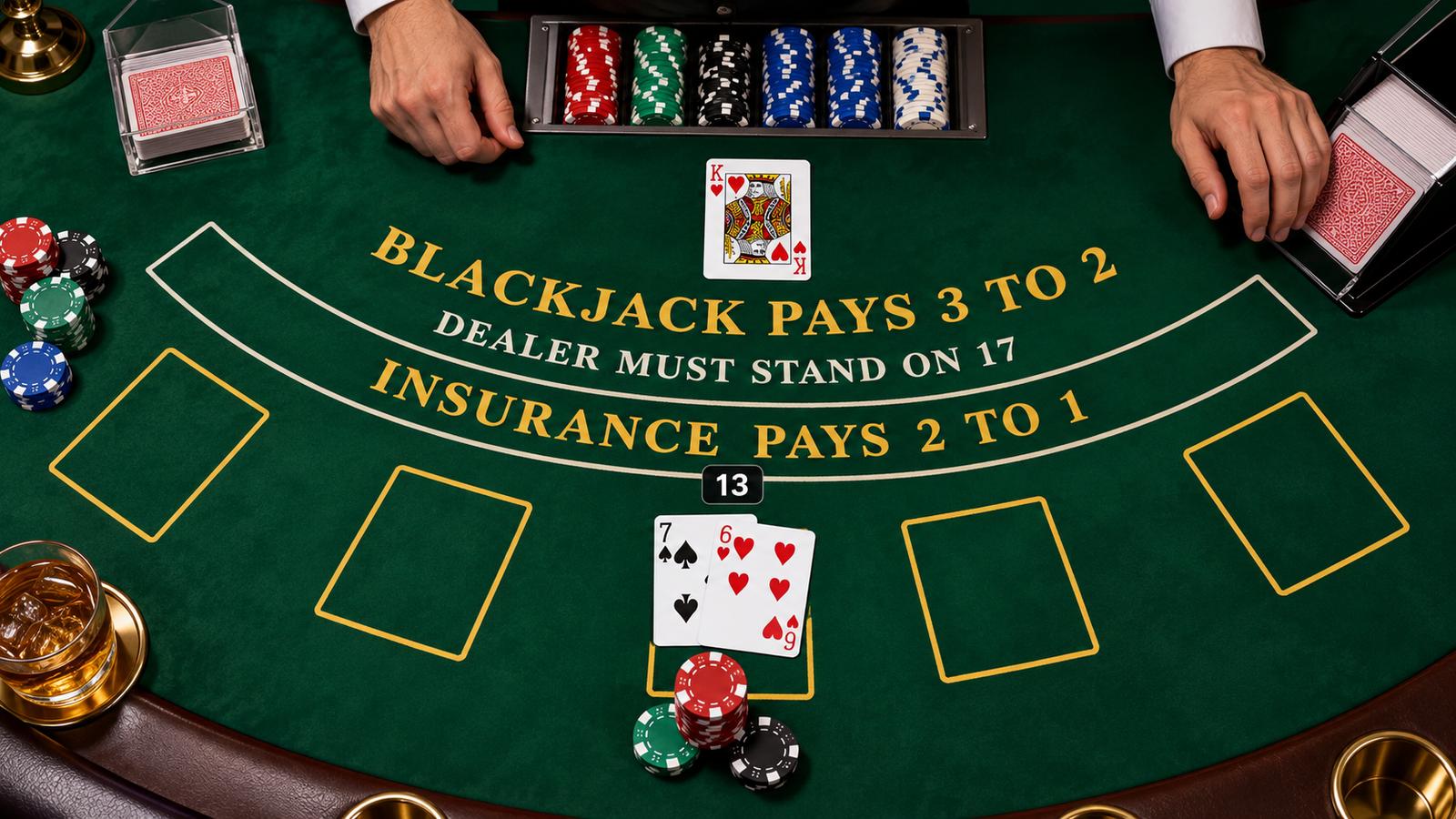
Direct Answer: You stand on a Hard 13 against a dealer upcard of 2 through 6, and you hit against a dealer 7 through Ace. When the dealer shows a weak upcard (2–6), their bust probability is between 35% and 43%, making standing statistically superior to risking a bust. Against a 7 through Ace, the dealer makes a pat hand (17–21) over 74% of the time, making hitting a mathematical necessity despite your 38.5% chance of busting.
A "stiff" Hard 13 (such as 10-3, 9-4, or 8-5) is one of the most frustrating hands in casino blackjack. You are just one card away from a strong total, yet five cards (9, 10, J, Q, K) will bust you immediately.
Because players hate busting with their own hands, casual gamblers frequently make the catastrophic mistake of standing on 13 against strong dealer cards like 7, 8, 9, or 10.
Here is the definitive mathematical breakdown of the 13 decision matrix, dealer bust probabilities, and the crucial distinction between a Hard 13 and a Soft 13.
1. The Complete Hard 13 Decision Matrix: Upcard by Upcard
Blackjack basic strategy is not a matter of intuition; it is derived from millions of computer simulations calculating the exact Expected Value (EV) of hitting versus standing.
The table below displays the dealer's bust probability and the mathematically optimal action for a Hard 13 across all possible dealer upcards:
| Dealer Upcard | Dealer Bust Probability | Expected Value (Standing) | Expected Value (Hitting) | Mathematically Correct Play |
|---|---|---|---|---|
| 2 | 35.3% | -0.292 | -0.316 | STAND |
| 3 | 37.5% | -0.252 | -0.301 | STAND |
| 4 | 40.3% | -0.201 | -0.285 | STAND |
| 5 | 42.9% | -0.155 | -0.264 | STAND |
| 6 | 42.1% | -0.162 | -0.278 | STAND |
| 7 | 26.0% | -0.478 | -0.376 | HIT |
| 8 | 23.9% | -0.518 | -0.412 | HIT |
| 9 | 23.3% | -0.531 | -0.458 | HIT |
| 10 / Face | 21.4% | -0.540 | -0.518 | HIT |
| Ace | 11.6% | -0.669 | -0.542 | HIT |
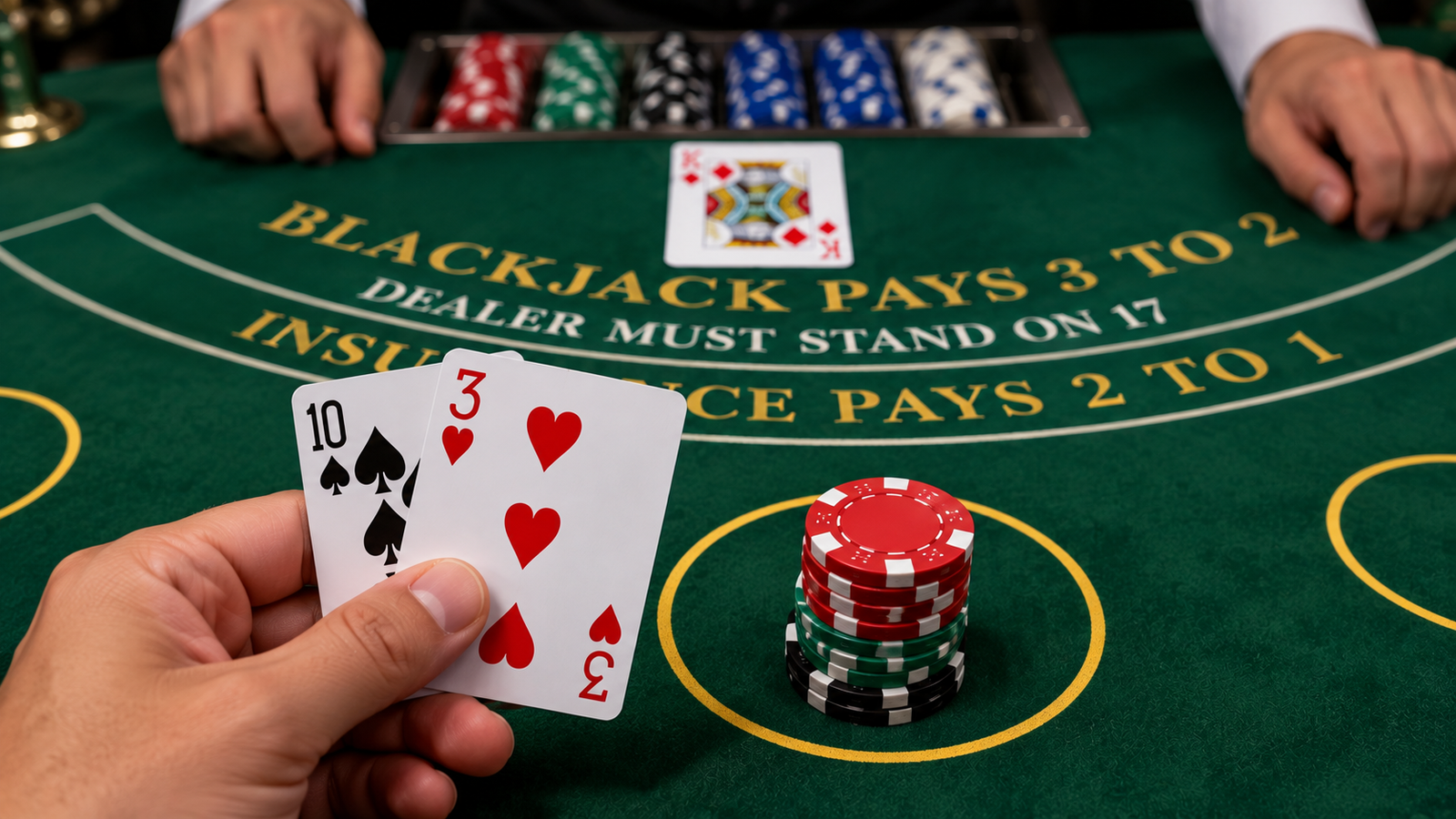
2. Why Standing on 13 Against a 7 or 10 Is a Costly Mistake
When you hold a Hard 13, you will bust on a hit exactly 38.5% of the time (5 out of 13 ranks: 9, 10, J, Q, K). This fear causes recreational players to freeze and stand against dealer 7s, 8s, 9s, and 10s.
However, look at the dealer's reality:
- Against a dealer 7 upcard, the dealer will make a pat hand of 17 through 21 approximately 74% of the time.
- Against a dealer 10 upcard, the dealer will make 17 through 21 approximately 78.6% of the time.
If you stand on 13, you are handing the dealer an uncontested win roughly 3 out of every 4 rounds. While hitting busts you 38.5% of the time, the remaining 61.5% of draws give you a fighting chance to draw a 4, 5, 6, 7, or 8 and beat or push the dealer.
As proven by the Expected Value numbers, hitting loses significantly less money over time than standing. In blackjack, optimal strategy often means choosing the least negative expectation play.
3. Hard 13 vs. Soft 13 (A-2): The Crucial Difference
Never treat all 13s the same. A Soft 13 (Ace + 2) contains an Ace that can be counted as either 1 or 11, meaning you cannot bust by taking one hit:
| Hand Type | Cards in Hand | Vs. Dealer 2, 3, 4 | Vs. Dealer 5, 6 | Vs. Dealer 7 through Ace |
|---|---|---|---|---|
| Hard 13 | 10-3, 9-4, 8-5 | STAND | STAND | HIT |
| Soft 13 | Ace + 2 | HIT | DOUBLE DOWN | HIT |
Rule to Remember: You never stand on a Soft 13. If the dealer shows a 5 or 6 (their weakest bust cards), basic strategy dictates an aggressive Double Down to extract maximum equity. Against all other upcards, you take a free hit to improve your total.
4. The 12 vs. 13 Confusion: Why Does a 12 Hit Against a 2 or 3?
A frequent source of confusion on casino message boards is why a Hard 12 hits against a dealer 2 and 3, while a Hard 13 stands:
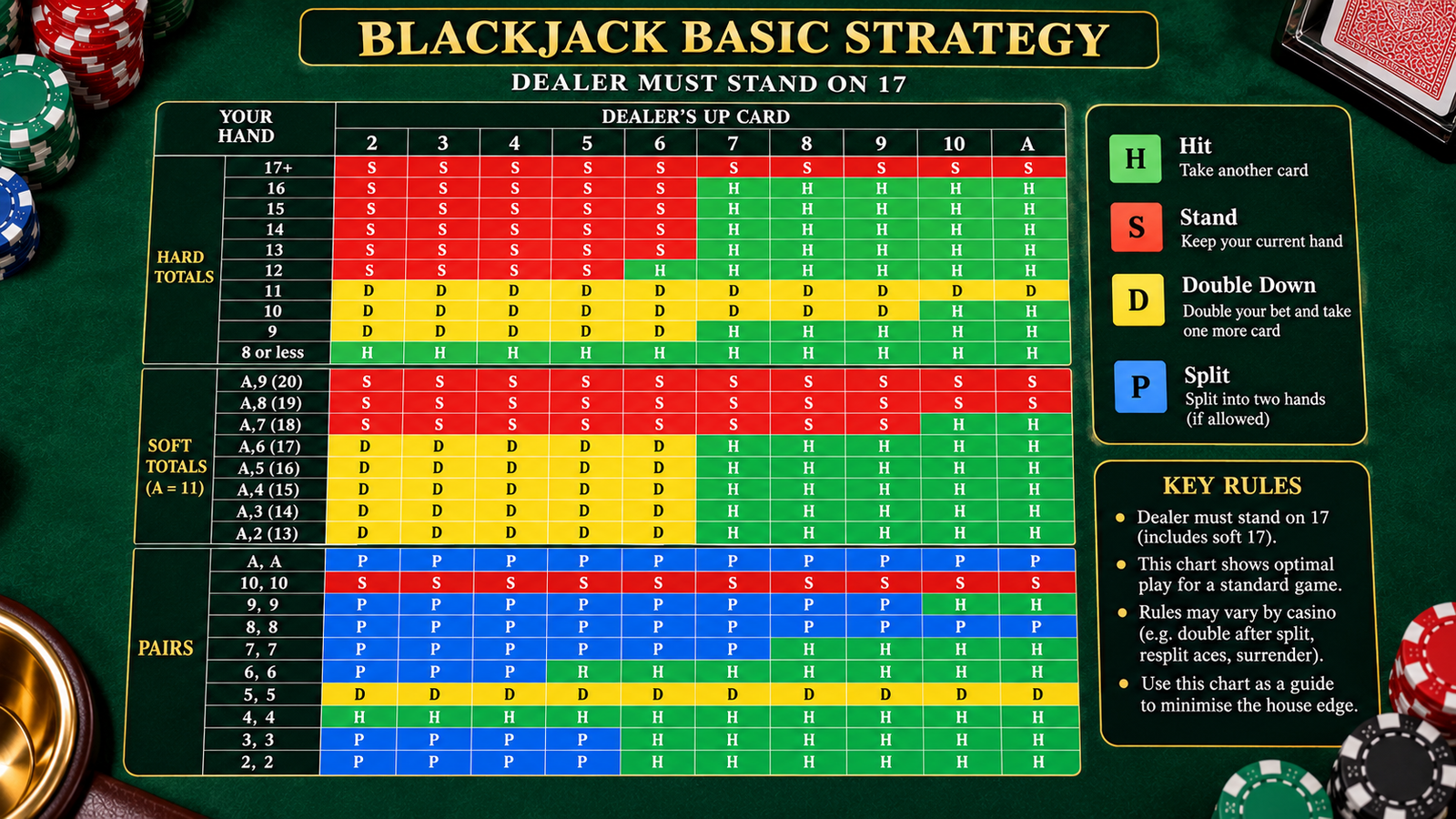
- On a Hard 12, only four cards bust you (10, J, Q, K = 30.8% bust rate). Cards 5 through 9 improve your hand directly into a pat total. That extra safety margin makes hitting profitable against a dealer 2 or 3.
- On a Hard 13, five cards bust you (9, 10, J, Q, K = 38.5% bust rate). That extra losing rank tips the mathematical scale, making standing the higher-EV play against weak dealer cards.
5. Card Counting Deviation: The Hard 13 vs. Dealer 2 Index
For advantage players using the Hi-Lo Card Counting System, basic strategy has a precise mathematical exception:
On a Hard 13 versus a Dealer 2, basic strategy says to Stand. However, if the True Count drops to -1 or lower, the remaining shoe is heavily saturated with low cards (2s, 3s, 4s, 5s) and depleted of 10s.
At True Count -1 or below, card counters deviate from basic strategy and HIT Hard 13 against a 2, because the risk of drawing a bust card drops well below normal baseline probabilities.
Table conditions also matter: games that feature dealer hitting on Soft 17 (H17) give the house slightly higher odds on weak upcards, reinforcing the value of strict basic strategy, especially on double-deck blackjack tables offering full 3:2 payouts.
Frequently Asked Questions
Should you ever hit a Hard 13 against a dealer 6?
Never. A dealer upcard of 6 is the mathematically weakest card in the deck, resulting in a dealer bust rate of over 42%. Standing on any stiff hand from 13 through 16 against a 6 gives you maximum mathematical expectation.
What if my 13 consists of three cards (e.g., 5-5-3)?
Multi-card Hard 13s follow the exact same rule: stand against dealer 2 through 6, and hit against 7 through Ace. If you were dealt a pair of 5s initially, basic strategy dictates never splitting 5s—you treat a pair of 5s as a Hard 10 and double down against 2 through 9.
Is it bad table etiquette to hit a 13 against a dealer 7 or 10?
No. Despite what misinformed casino players might shout at the table, hitting 13 against a dealer 7, 8, 9, 10, or Ace is 100% mathematically correct basic strategy. Standing on 13 against high dealer cards is an amateur error that increases the casino's house edge.
Do I hit a Soft 13 (A-2) against a dealer 2?
Yes. You never stand on a Soft 13. Because an Ace counts as 1 or 11, taking a hit carries zero risk of busting. You hit Soft 13 against 2, 3, and 4, double down against 5 and 6, and hit against 7 through Ace.
Summary Key Takeaways
- Hard 13 Rule: Always Stand against dealer upcards 2 through 6; always Hit against dealer upcards 7 through Ace.
- Soft 13 Rule: Never Stand on Ace + 2. Double down against 5 and 6; Hit against all other upcards.
- The Math: Hitting 13 against a 7 or 10 feels scary, but standing gives the dealer an uncontested win over 74% of the time.