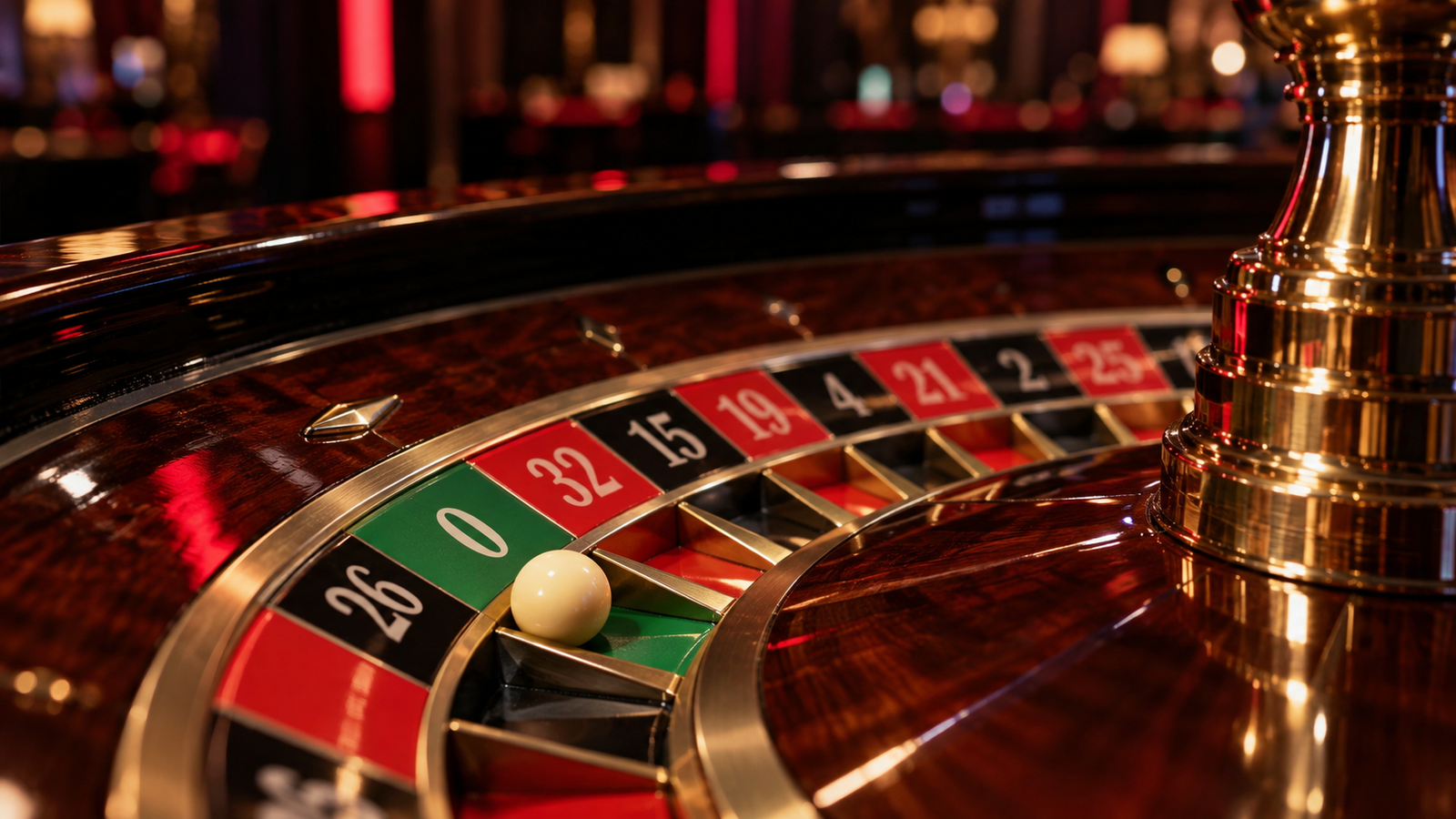
Direct Answer: No, all roulette wheels are not the same. Roulette wheels differ fundamentally in their pocket count, number sequence, physical fret engineering, and mathematical house edge. The three primary wheel variants are European Single-Zero (2.70% house edge), American Double-Zero (5.26% house edge), and the modern Triple-Zero wheel (7.69% house edge). Playing on the wrong wheel nearly triples the casino's mathematical advantage.
To an untrained eye, every roulette wheel looks like a spinning bowl of alternating red and black numbered pockets with a gleaming brass turret in the center.
In reality, roulette wheels are governed by completely different mathematical architectures and physical engineering standards. Stepping up to an unfamiliar wheel without checking its zero pockets is one of the most expensive mistakes a casino player can make.
1. The 3 Wheel Variants: Pockets, Layout & House Edge
The most critical difference between roulette wheels is the number of green zero pockets. Because all single-number bets pay out at 35 to 1 regardless of how many pockets exist, adding green zero pockets directly dilutes your probability of winning:
| Roulette Wheel Type | Total Pockets | Zero Configuration | Single Number Win Odds | Casino House Edge |
|---|---|---|---|---|
| European / French | 37 | Single Zero (0) | 1 in 37 (2.70%) | 2.70% (1.35% with La Partage) |
| American | 38 | Double Zero (0, 00) | 1 in 38 (2.63%) | 5.26% |
| Triple Zero (Sands) | 39 | Triple Zero (0, 00, 000) | 1 in 39 (2.56%) | 7.69% (Predatory) |
2. Number Sequences Are Completely Different
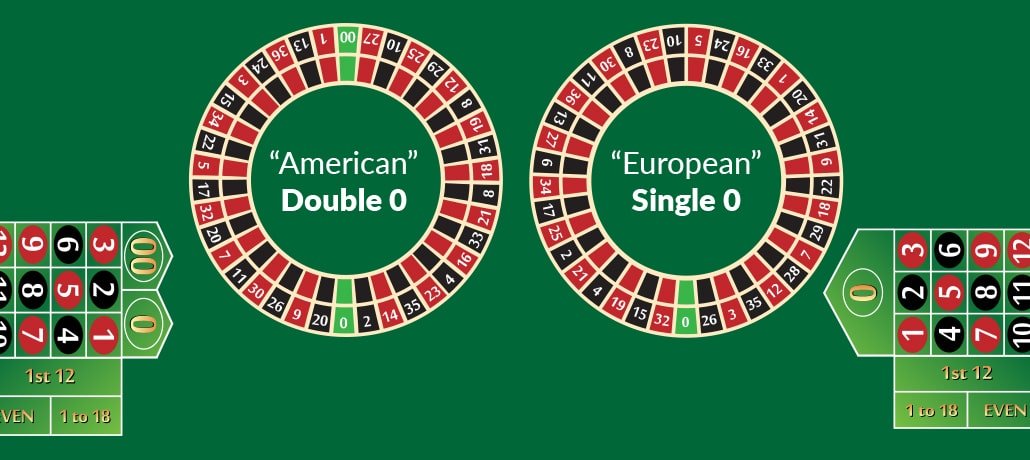
Beyond the zero pockets, the numerical sequence around the rim is completely different between European and American wheels:
- European Wheel Sequence:
0, 32, 15, 19, 4, 21, 2, 25, 17, 34, 6, 27, 13, 36, 11, 30, 8, 23, 10, 5, 24, 16, 33, 1, 20, 14, 31, 9, 22, 18, 29, 7, 28, 12, 35, 3, 26. - American Wheel Sequence:
0, 28, 9, 26, 30, 11, 7, 20, 32, 17, 5, 22, 34, 15, 3, 24, 36, 13, 1, 00, 27, 10, 25, 29, 12, 8, 19, 31, 18, 6, 21, 33, 16, 4, 23, 35, 14, 2.
Why Are the Numbers Not in Numerical Order?
Roulette wheels are engineered to prevent sector clustering. Both layouts distribute high numbers (19–36) and low numbers (1–18), as well as red and black colors, as evenly as possible.
However, European wheels are specifically mapped into mathematical sectors—such as Voisins du Zéro (Neighbors of Zero) and Tiers du Cylindre (Thirds of the Wheel)—which are utilized for called sector bets in French roulette.
3. Physical Wheel Engineering: Huxley vs. Cammegh
Modern casino roulette wheels are precision-machined instruments produced by elite manufacturers like TCS John Huxley and Cammegh:
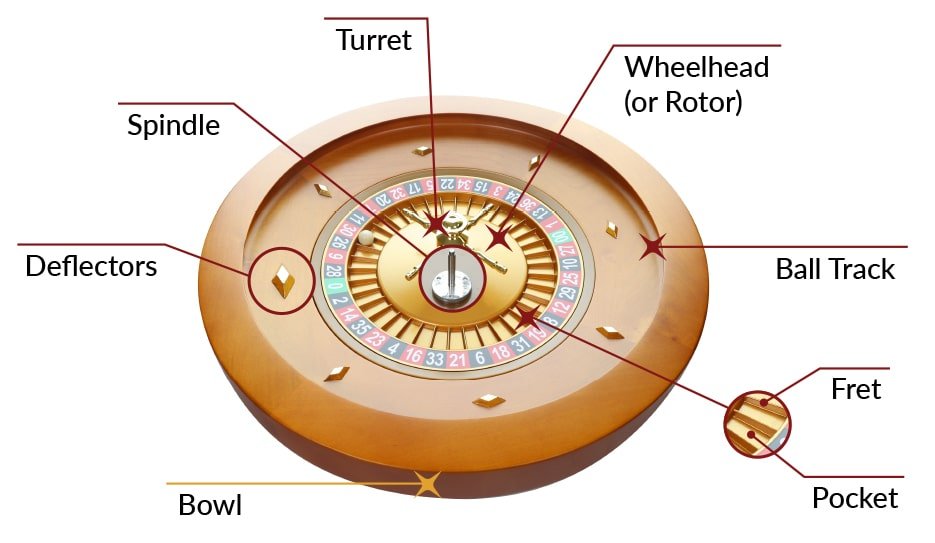
- Fret Height (Pocket Dividers): Older wheels had deep pocket frets where the ball would drop and quickly settle. Modern casino wheels use ultra-shallow, curved aluminum frets (often called StarBurst or scalloped separators). This induces chaotic ball bounce, making wheel clocking and visual physics prediction impossible.
- Deflector Pins: The small metal diamonds or canoes mounted on the ball track are deliberately varied in angle and profile to randomize the ball's trajectory as it loses velocity.
4. The French Roulette Secret: La Partage & En Prison
Even on identical 37-pocket European wheels, the underlying table rules can cut the house edge in half:
- La Partage Rule: If you place an even-money bet (Red/Black, Odd/Even, 1-18/19-36) and the ball lands on green zero (0), the dealer returns 50% of your wager immediately.
- The Mathematical Result: The house edge on even-money bets drops from 2.70% down to 1.35%.
This makes French roulette with La Partage one of the lowest house-edge games in the entire casino, rivaling favorable rules in 3:2 blackjack and superior to high denomination slot machines.
5. Expected Loss Comparison: $100 Wagered
To illustrate how wheel choice impacts your bankroll over time, here is your statistical expected loss for every $100 wagered:
- French Roulette (La Partage): -$1.35 per $100
- European Roulette (Single 0): -$2.70 per $100
- American Roulette (Double 00): -$5.26 per $100
- Triple-Zero Roulette (Sands 000): -$7.69 per $100
Frequently Asked Questions
Why does American roulette have a higher house edge than European roulette?
American roulette adds an extra green double-zero (00) pocket, bringing the total to 38 pockets while keeping the payout on winning single numbers at 35 to 1. This extra losing pocket nearly doubles the casino's statistical edge from 2.70% to 5.26%.
Is Triple-Zero roulette ever worth playing?
Mathematically, never. Triple-Zero wheels carry a massive 7.69% house edge—almost triple the house take of European roulette. They are designed by operators primarily to exploit tourists who don't examine the wheel pockets.
What is the difference between European and French roulette?
Both wheels share the identical 37-pocket layout with a single green zero. However, French roulette features the La Partage or En Prison rule on even-money bets, which refunds half your bet if the ball lands on zero, reducing the house edge from 2.70% down to 1.35%.
Does the order of numbers on a roulette wheel actually matter?
Mathematically for random spins, the physical sequence does not alter independent probability. However, European wheels are arranged specifically to enable traditional called sector bets (such as Voisins du Zéro and Tiers), whereas American sequences follow a diametrically opposed arrangement designed around single/double zeros.
Can a physical roulette wheel develop a mechanical bias?
Historically, mechanical wear, uneven fret fretting, or subtle table tilt could create a pocket bias that advantage players tracked. Modern casinos combat this with laser-leveled spindles, periodic wheel rotations between tables, and automated automated optical tracking systems that flag statistical anomalies.
Are roulette wheels in online casinos the same as physical wheels?
Software-based (RNG) online roulette wheels simulate the pocket configurations of European or American wheels using certified Random Number Generators. Live dealer online roulette uses authentic physical TCS John Huxley or Cammegh precision wheels streamed in real time.
Summary Key Takeaways
- Roulette wheels are not the same; always inspect the green pockets before placing your first chip.
- Always choose European single-zero wheels (2.70% edge) over American double-zero wheels (5.26% edge).
- Strictly avoid Triple-Zero wheels (7.69% edge), which represent one of the worst mathematical bets in any casino.