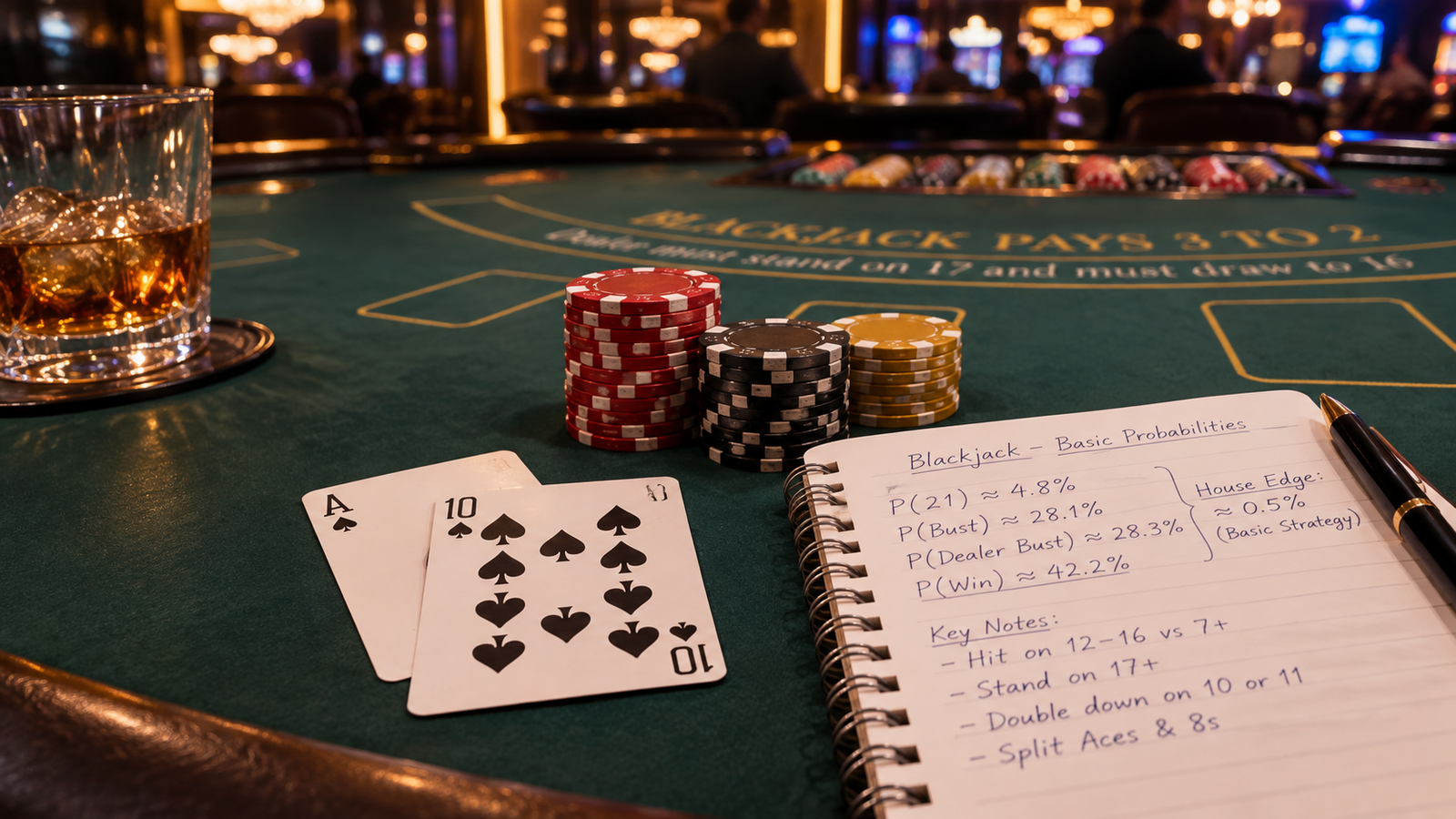
About six years ago, I sat at a live dealer blackjack table at 2:30 AM with a cold drink, an exhausted brain, and an account balance that was rapidly vanishing.
I was convinced the dealer was "due" to bust. She had pulled four 20s and a 21 in the last six hands. So, naturally, I did what every undisciplined player does when they’re chasing a loss: I tripled my bet size, got dealt a hard 16 against her 6, panicked, hit anyway, caught a King, and busted. Two minutes later, my entire weekend bankroll—$1,200—was completely gone.
I didn't sleep much that night. But the next morning, instead of depositing more cash or swearing off card games forever, I opened up a blank spreadsheet and started logging the actual numbers.
That brutal session was the best thing that ever happened to me as a player. It forced me to strip away all the ego, the superstitions, and the "gut feelings" to look at what casino games really are: pure mathematical puzzles with fixed statistical rules.
The moment you stop trying to "beat the streak" and start calculating Expected Value on every single bet, you stop being a gambler and start playing like a sharp bettor.
1. The House Doesn’t Beat You With Luck. It Beats You With Compound Interest.
When you walk into a casino or log into an online site, the house is never worried about your hot streak. They don't care if you hit a $500 payout on your third spin or double down successfully three hands in a row.
Why? Because they understand the Law of Large Numbers, and most players don't.
Every bet you make has a built-in mathematical tax. On a standard European roulette wheel, that tax is 2.70%. On an American wheel with a double zero, it jumps to 5.26%.
Over 10 spins, variance dominates. You might double your money; you might lose it all. But over 1,000 spins, the math slowly grinds your stack down like sandpaper against wood. The longer you sit without a structured exit plan, the closer your results align with that house edge.
2. The 6:5 Blackjack Trap (And Other Things I Refuse to Touch)
You’d be amazed at how casinos quietly tweak small rules that cost players thousands of dollars over time without them ever noticing.
Take Blackjack payouts, for example:
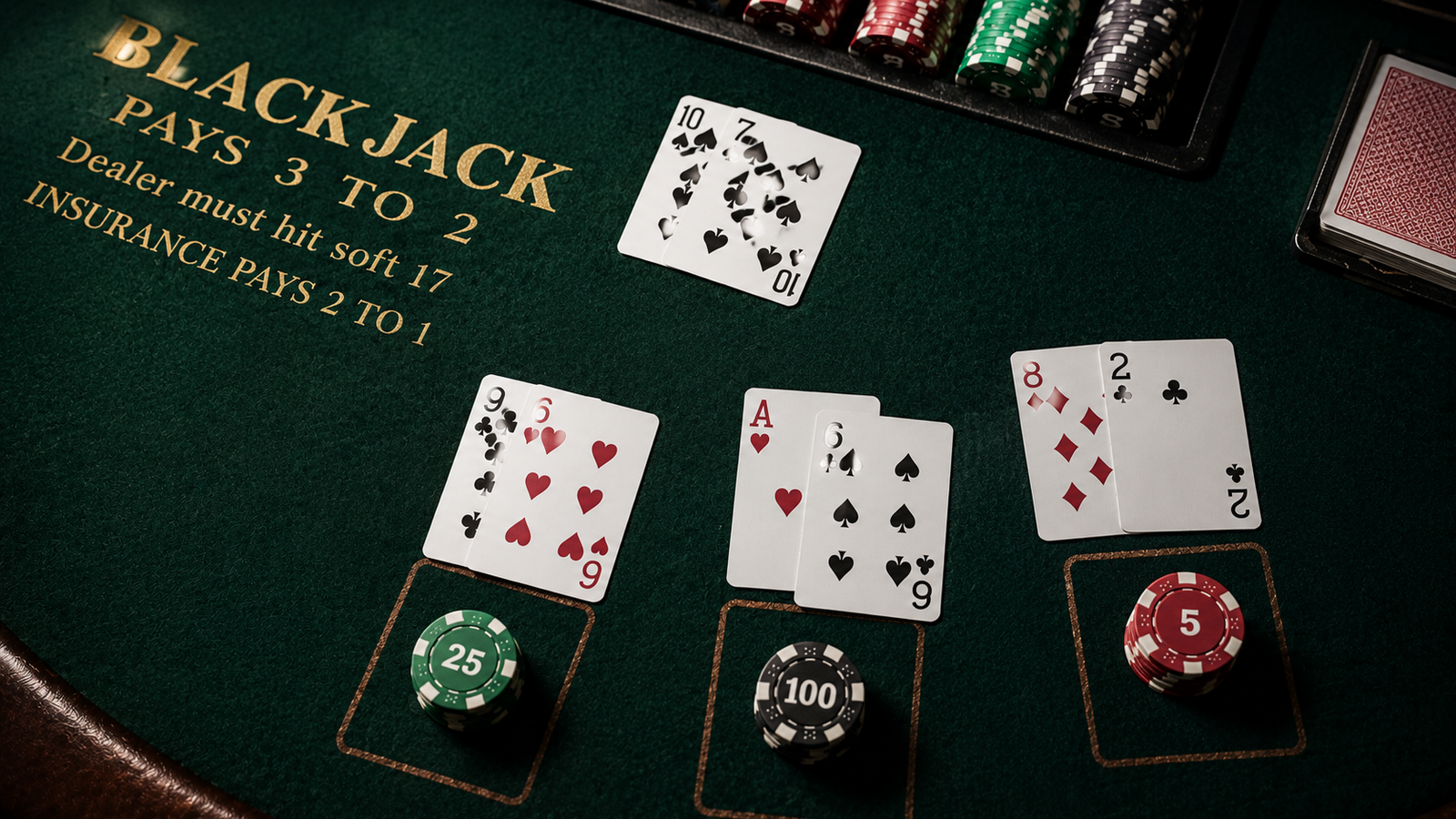
- 3:2 Table: A $10 bet wins $15 on a natural blackjack (Standard fair mathematical rules).
- 6:5 Table: A $10 bet wins only $12 on a natural blackjack (The predatory tourist trap).
That tiny $3 difference sounds trivial until you run the math: a 6:5 payout increases the house edge by roughly 1.4% overnight. It effectively triples the casino’s statistical advantage against you.
I made a personal rule years ago that I still follow religiously today: If a table pays 6:5, or if a slot doesn’t publish its verified RTP, I don’t give them a single cent. Knowing the difference between good and bad rules is the easiest edge you will ever find.
3. Bankroll Management is 80% Psychology, 20% Math
Most gambling guides give you complicated mathematical formulas for staking. But the hardest part of managing your money isn't calculating 2% of your balance—it's having the discipline to close the laptop when that 20% loss limit is hit.
The 1% Unit Rule
Never stake more than 1% to 1.5% of your total bankroll on a single hand or spin to survive variance.
Walk Away Up 40%
Lock in your profit before the long-term mathematical house edge has time to grind your stack down.
Zero Chasing
Doubling down after a loss (Martingale) is a guaranteed recipe for hitting table limits and wiping out accounts.

4. Slots Aren't Just Random Lights—They Have Personalities
When I first started playing online slots, I thought they were all basically the same game with different graphics and sound effects. I was completely wrong.
Once you start looking at the math sheets behind slot mechanics, you realize the massive difference between low volatility and high volatility:
If you're on a small bankroll and want steady entertainment, you look for low-variance, high-RTP (97%+) titles. You’ll get frequent small wins that keep your stack floating. If you sit down at an ultra-high volatility slot with only 30 bets in your balance, the math will eat you alive 9 times out of 10 before you ever see a bonus round.
Why I Built NutWager
The internet is flooded with low-effort casino review sites that just want to shove promotional codes in your face and promise you guaranteed winning systems.
I wanted to build something different with NutWager.
In poker, holding "The Nuts" means you have the best possible hand. On this site, our goal is to give you the best possible information: real probability breakdowns, honest game mechanics, bankroll frameworks that actually work, and zero fluff.
"Play with a clear head, respect the math, and never risk money you can't afford to lose."
Welcome to the journal. See you at the tables.