Key Takeaways for Sharp Bettors
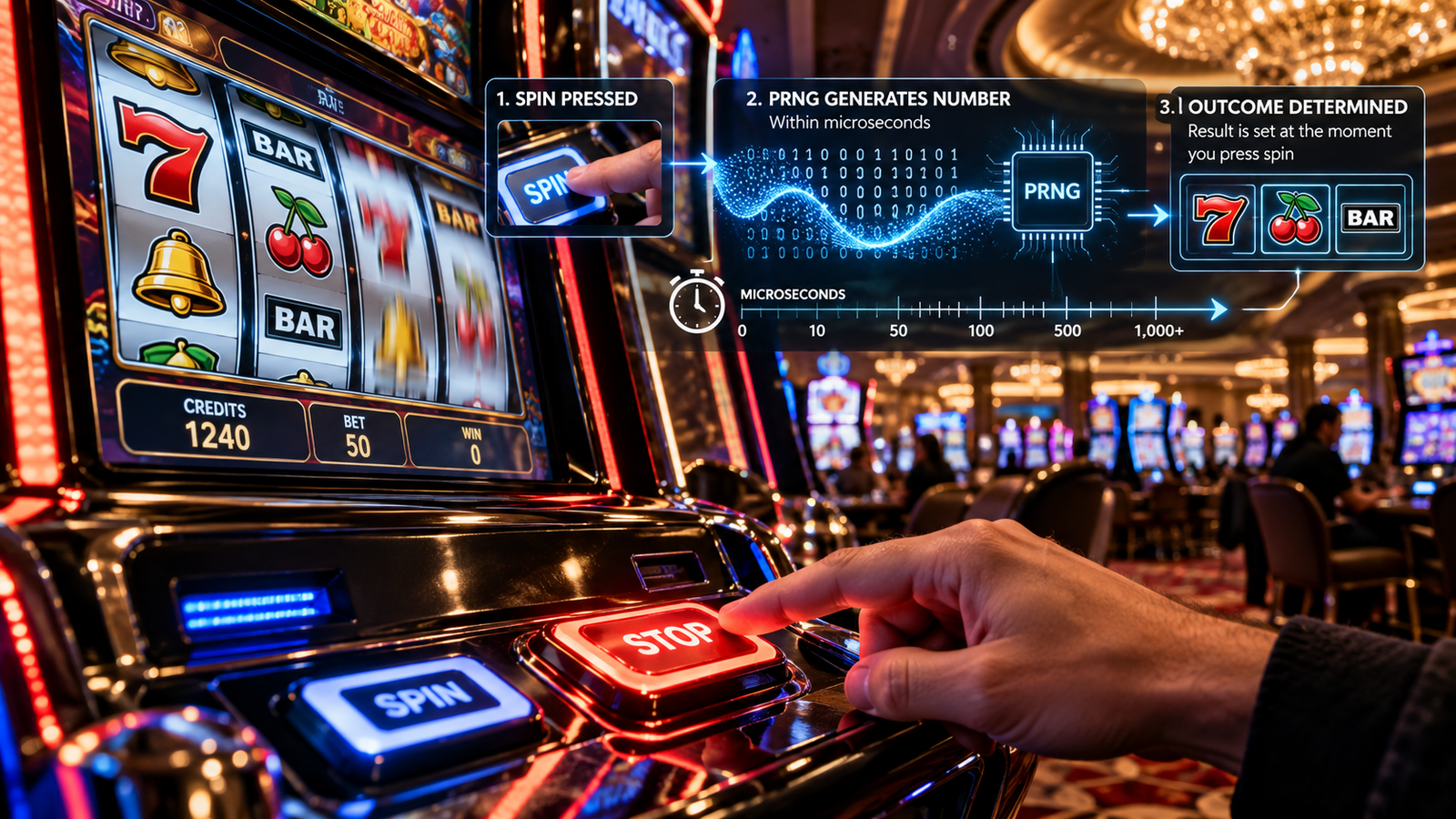
- Zero Outcome Influence: Pressing the "Stop" button on a modern slot machine has 0.00% effect on the spin's outcome. The symbols are locked within microseconds of pressing "Spin" via the internal Pseudo-Random Number Generator (PRNG).
- GLI-11 Compliance: Under Gaming Laboratories International Standard GLI-11 (Section 3.4.1), physical reel spin animations are legally categorized as display presentations; manual stops are strictly cosmetic "animation truncation."
- The "Next Spin" Paradox: Stopping early does alter the millisecond at which you trigger your subsequent spin, sampling a different PRNG seed—yet your statistical Expected Value (EV) and Return to Player (RTP) remain completely unchanged.
- The House Edge Velocity Trap: Clinical data from the University of British Columbia demonstrates that the stop button eliminates natural post-win pauses, increasing play speed from 450 to over 1,200 spins per hour and surging your expected hourly loss by 166%.
Few mechanical features on a modern casino floor generate as much superstition as the slot machine "Stop" button. Watch any high-limit room or local gaming floor, and you will witness players furiously double-tapping the spin button or physically grabbing touchscreens to brake spinning reels in hopes of snatching a passing jackpot symbol.
Players believe their reaction speed gives them agency over the machine. Casual advice columns brush it off with a dismissive "it's all just random."
To understand what actually happens when you press that button, we must look at the digital architecture inside the machine: microsecond clock cycles, the Gaming Laboratories International (GLI-11) regulatory framework, and empirical behavioral research from the University of British Columbia.
1. The Microsecond Architecture: Why Your Spin Is Decided at t = 0
To understand why slamming the stop button cannot alter your reel symbols, you have to look at the sequence of execution between the user interface and the underlying hardware.
A modern video slot machine does not operate like a mechanical 1970s three-reel physical machine. It is a locked computational terminal executing proprietary software governed by a Pseudo-Random Number Generator (PRNG). As detailed in our breakdown of how slot machine EPROMs and RNGs operate, the PRNG never rests. It cycles through mathematical algorithms—typically generating values between 1 and several billion—at speeds of hundreds to thousands of calculations per second based on the central processing clock.
The sequence of a single wager unfolds in two completely separate phases:
- The Determination Phase (Time: 0 milliseconds): The microsecond your finger makes electrical contact with the "Spin" button (or bet button), the software polls the PRNG register. It extracts the integer corresponding to each reel strip. Those numbers are cross-referenced with the internal lookup table (virtual reel mapping under the Telnaes architecture). At this microsecond—before the graphic reels on your screen have moved a single pixel—your outcome, payout, and symbol arrangement are 100% mathematically finalized.
- The Animation Phase (Time: 0 to 4,000 milliseconds): The visual spinning of the reels, the escalating audio chimes, and the near-miss graphic displays are purely an audiovisual playback routine designed to build psychological anticipation.
When you press the "Stop" button 800 milliseconds into the spin, you are not interacting with the RNG. You are simply issuing a frontend graphic command: SkipAnimation(). The game engine abruptly halts the display frames and instantly snaps the reels to the coordinates determined at millisecond zero.
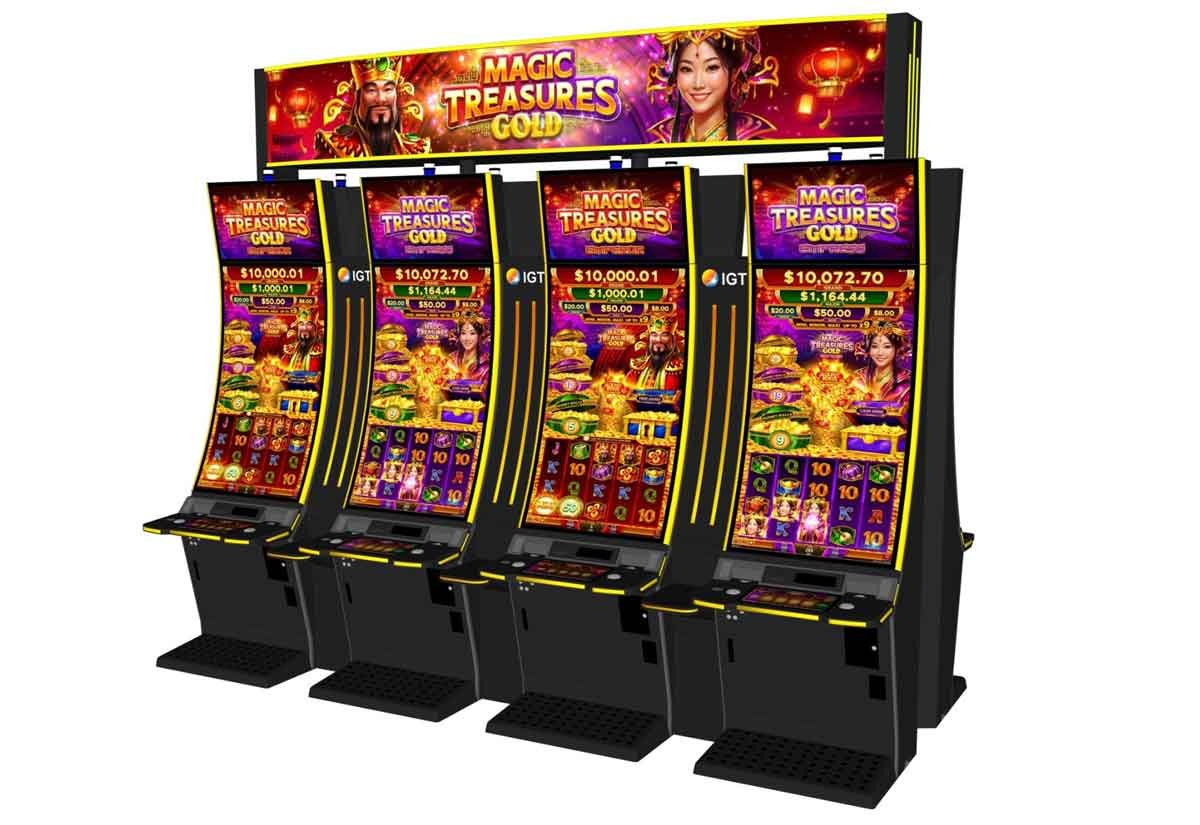
Figure 1: High-speed PRNG registers lock the spin outcome at t=0; manual reel stops serve exclusively as visual presentation skips.
2. The Legal Reality: GLI-11 Standards & Class III Regulations
This separation between outcome determination and visual presentation is not just software design—it is a strict legal requirement across all regulated gaming jurisdictions.
Gaming devices in Nevada (Nevada Gaming Control Board Regulation 14), New Jersey (DGE), the UK (UKGC), and tribal casinos must be certified by independent testing laboratories, the largest being Gaming Laboratories International (GLI).
Under GLI-11 (Standard for Gaming Devices in Casinos, Section 3.4.1: Display of Game Outcomes), gaming regulations explicitly mandate:
"The gaming device shall not present an outcome that misleads the player into believing they have influenced an outcome that was predetermined by the random selection process... The display of the result of a game shall not be altered by any subsequent player interaction unless the device has been explicitly tested and approved as a skill-based gaming apparatus."
Under statutory standards, if pressing a physical button during reel rotation could alter a winning combination to a losing combination (or vice versa), the machine would legally cease to be a Class III game of chance. It would either be classified as illegal unauthorized gambling or require reclassification under strict skill-gaming statutes.

Figure 2: Gaming Laboratories International GLI-11 standard explicitly defining the legal separation between random number determination and visual reel presentation.
3. The "Next Spin" Paradox: Does Stopping Early Alter What Happens Next?
While educated bettors understand that stopping the reels does not alter the current spin, many ask a far more nuanced question:
"If I stop Spin #1 after 1 second instead of waiting the full 4 seconds, I press Spin #2 three seconds earlier than I would have. Doesn't that change the outcome of the next spin?"
The mathematical and computational answer is: Yes, it changes the specific outcome—but it offers zero mathematical advantage.
Because the PRNG cycles continuously thousands of times per second, triggering your next spin at timestamp T + 1.200s samples a completely different seed integer than triggering it at timestamp T + 4.500s. The symbols that land on Spin #2 will be completely different from the symbols you would have received had you waited.
The Die-Roll Equivalence
Think of it like rolling a fair six-sided die. If you roll it right now, you might roll a 4. If you wait 5 seconds and roll it, you might roll a 2. Does choosing to roll now change the outcome compared to rolling later? Yes. But did it increase your probability of rolling a 6? Not by a fraction of a percent. Every independent time sample on an RNG distribution holds the exact same house edge and theoretical Return to Player (RTP).
Just as in our analysis of independent trials in the Martingale system, replacing one blind random draw from an infinite uniform distribution with another blind random draw from the identical distribution yields an Expected Value shift of exactly 0.0000%.
4. The Casino Lab Evidence: How the Stop Button Traps Players
If the stop button does not change outcomes or odds, why do manufacturers install it, and why do casino operators encourage its use?
The answer was uncovered in an empirical study conducted by cognitive psychologists at the Centre for Gambling Research at the University of British Columbia (Chu, Limbrick-Oldfield, Murch, & Clark, 2017). The researchers placed both recreational and regular slot machine players inside a controlled "Casino Lab" equipped with telemetry-monitored multi-line slot machines.
The study revealed two profound psychological and behavioral insights:
- Illusion of Control: Nearly half (48%) of regular slot players demonstrated cognitive illusions of control, believing the stop button improved their results or allowed them to "time" near-misses.
- Eradication of Post-Reinforcement Pauses (PRPs): In natural slot play, humans pause after receiving sensory feedback—specifically after wins, near-misses, and losses disguised as wins (LDWs). The UBC experiment proved that using the stop button virtually eliminates these natural pauses, locking the player into a relentless, continuous wagering loop.
5. The True Cost: The Hourly Loss Acceleration Formula
Here is the real mathematical danger of using the stop button: while it does not reduce your RTP per spin, it dramatically increases your hourly loss velocity.
In casino math, a player's theoretical loss over time is governed by a fundamental equation:
When you let the reels spin naturally, an average cycle takes approximately 5 to 6 seconds, producing roughly 450 to 500 spins per hour. When a player rapidly double-taps or "slam-stops" the reels, a spin cycle collapses to 1.5 to 2.0 seconds, easily pushing spin volume to 1,200 to 1,500 spins per hour.
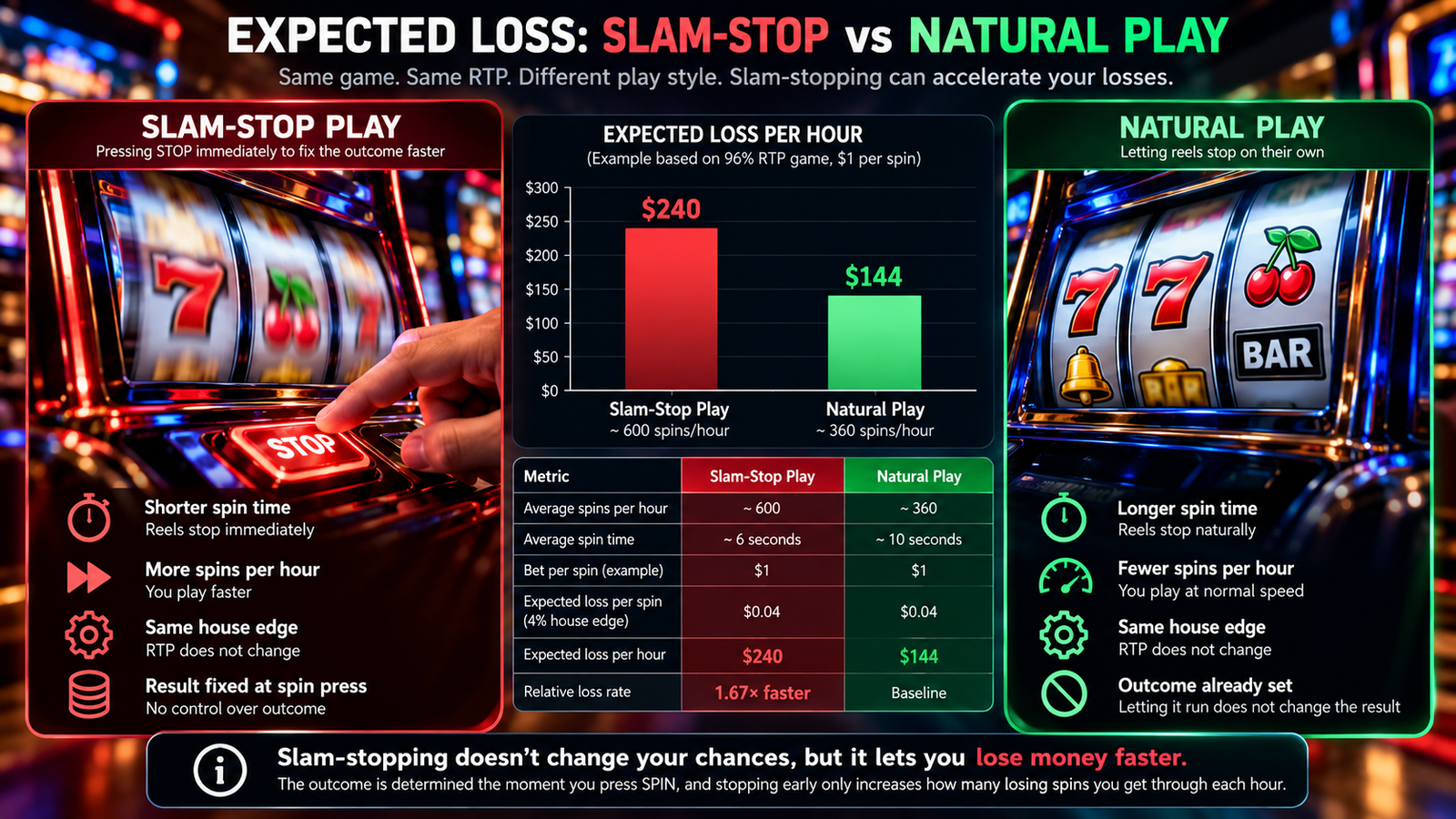
Figure 3: Spin speed comparison showing how rapid slam-stopping triples hourly wagers and expected losses under identical RTP.
| Play Style | Cycle Time | Spins / Hour | Wager / Spin | House Edge (92% RTP) | Expected Hourly Loss |
|---|---|---|---|---|---|
| Natural Spin (Full Animation) | 6.0 sec | 500 | $2.00 | 8.0% | $80.00 / hr |
| Early Stop (Occasional) | 4.0 sec | 750 | $2.00 | 8.0% | $120.00 / hr |
| Slam-Stop (Continuous Fast Play) | 1.8 sec | 1,333 | $2.00 | 8.0% | $213.28 / hr |
As demonstrated in the comparison table, continuously stopping the reels increases your hourly coin-in by 166.6%. On a machine set to an 8% house edge (typical for standard denominations, as analyzed in our study on high vs. low denomination slot payouts), your expected hourly cost surges from $80.00 to over $213.00.
You have not altered the machine's mathematical edge by one basis point—you have simply allowed the casino's house advantage to devour your bankroll almost three times faster.
6. Are There Any Real Exceptions? (Pachislo & Skill-Based Slots)
Are there ever instances where manual stopping changes the game outcome? Legally and historically, yes—under two very specific circumstances:
A. Japanese Pachislo Terminals
In Japan, parlor gaming regulations dictate that slot machines (Pachislo) cannot be pure games of chance. Japanese law requires physical stop buttons for each individual reel. When a player presses a reel button, the machine is legally mandated to stop the reel within 0.19 seconds (roughly within 4 symbol spaces). Experienced visual trackers known as meoshi (eye-stoppers) can visually clock the rotation and pick off cherry or 7 symbols. However, modern Pachislo chips utilize "control tables" that intentionally slip the reels if an internal bonus flag has not been tripped, minimizing player advantage.
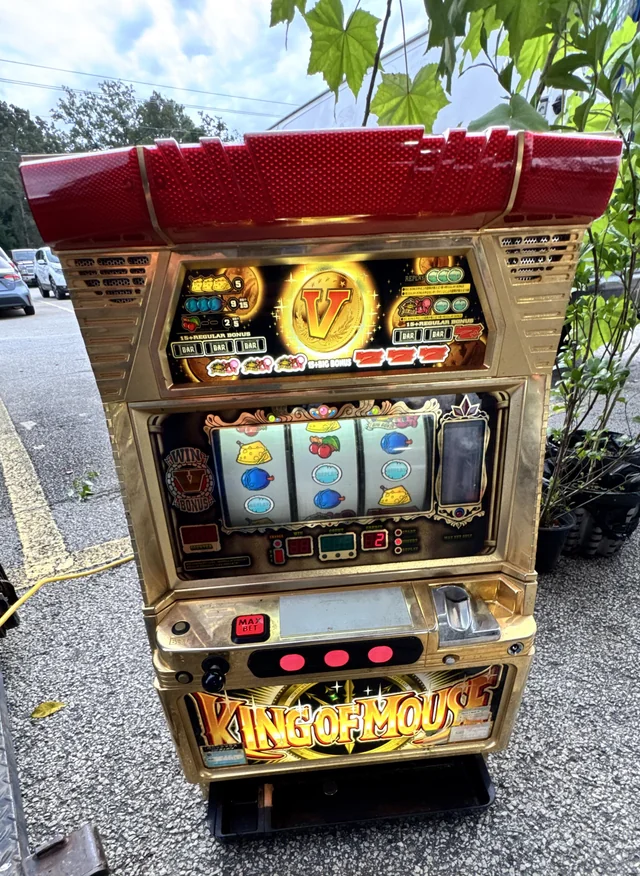
Figure 4: A Japanese Pachislo gaming machine featuring physical reel-stop buttons mandated under Japanese amusement laws.
B. Certified Skill-Based Bonus Rounds (e.g., IGT Reel Edge)
In Nevada and New Jersey, manufacturers like IGT released specialized series such as Reel Edge (featuring titles like Blood Life and Triple Red White & Blue). These hybrid machines allowed players to physically touch touchscreen reels during specific bonus rounds. In these rare, legally segregated machines, stopping precision can impact bonus payouts. However, the reels spin at speeds approaching 80+ RPM; human reaction time tests show that even skilled players achieve virtually zero actionable edge over baseline math.
7. Strategic Verdict: How Sharp Bettors Handle the Stop Button
If your objective is to preserve your bankroll and minimize the casino's mathematical hold on your capital, apply these three rules:
- Never Slam-Stop on a Fixed Bankroll: Fast-stopping the reels does nothing to rescue a cold session. It simply accelerates your hourly exposure to the house edge. If you have a $300 session bankroll, natural 6-second cycles allow you to play for hours; slam-stopping can burn that entire allocation in under 45 minutes.
- Use Early Stops Exclusively for Bonus Truncation: If a slot enters a lengthy, non-interactive free-spin sequence where bets are zero and you wish to minimize time spent on low-multiplier animations, skipping animations carries no mathematical penalty because no new capital is being risked.
- Understand the Illusion: When you hit the stop button and see a jackpot symbol halt one notch above the payline, realize that you did not "just miss" by 10 milliseconds. The machine knew you lost before the reels ever spun. That visual near-miss was procedurally generated to trigger your dopamine receptors and entice another spin.
Frequently Asked Questions
Does stopping a slot machine change its Return to Player (RTP)?
No. RTP is mathematically fixed by the machine's paytable weights and PRNG seed mapping. Stopping the reels merely changes the visual presentation speed, leaving the statistical payout percentage completely unchanged.
Can pressing the stop button cause a slot machine to malfunction or void a jackpot?
No. The stop button is an approved, integral component tested under GLI-11 standards. If a legitimate jackpot combination was chosen by the PRNG at spin initiation, stopping the reels early will display that exact winning combination without error or voided payouts.
Why do online slots have a "Turbo" or "Quick Spin" mode?
"Turbo Spin" automates the early stop function by eliminating the reel-spin animation entirely. Online casinos feature this mode because higher spin frequency directly multiplies their gross gaming revenue (GGR) per active player hour.