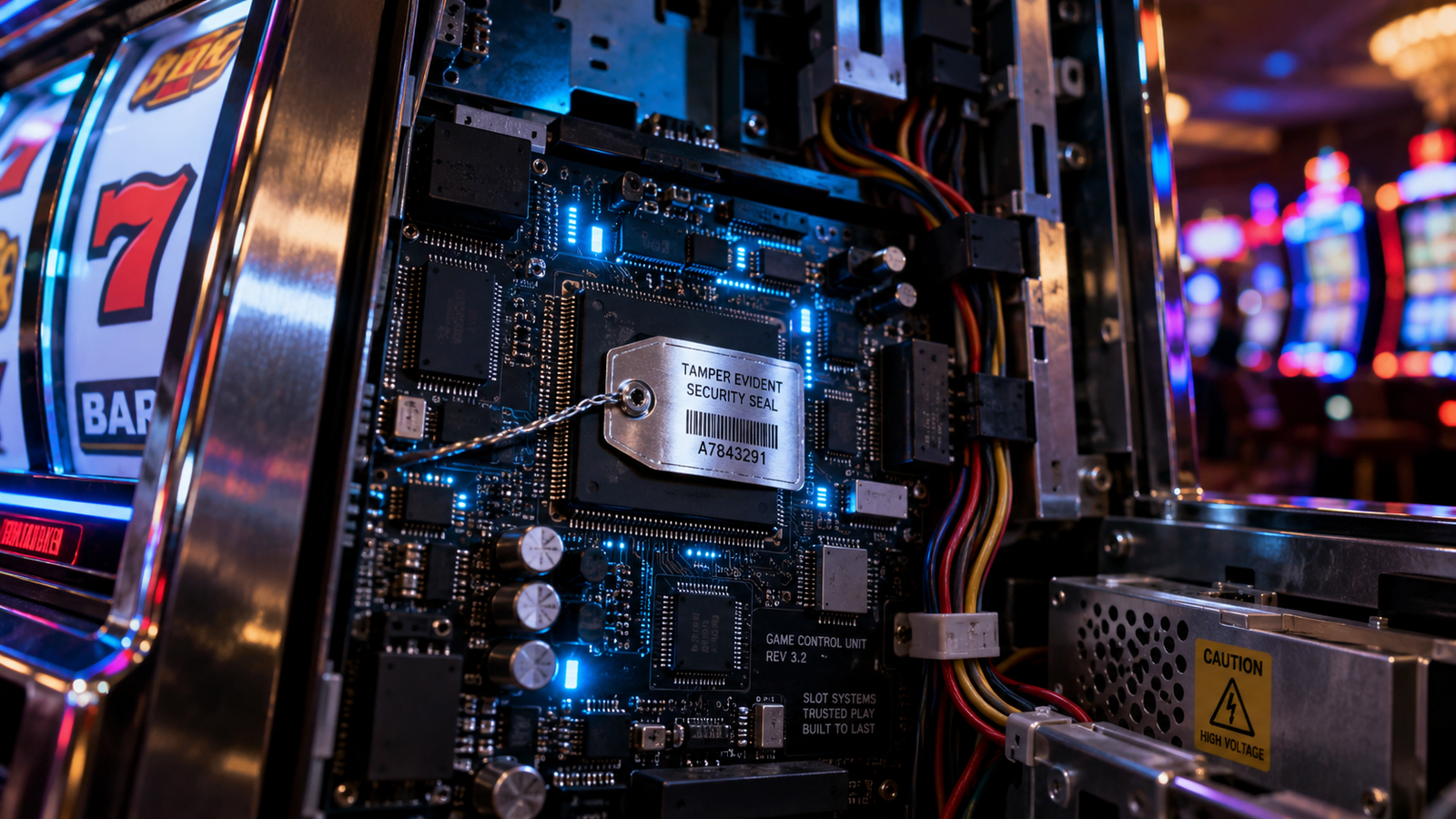
Direct Answer: Casinos never "reset" slot machines to change the odds, trigger a cold streak, or offset a recent jackpot. In regulated jurisdictions, altering a slot machine's Return to Player (RTP) requires strict State Gaming Control Board oversight, physical tamper-evident seals, or stringent idle-terminal protocols. The internal Random Number Generator (PRNG) cycles millions of numbers per second with zero memory of previous spins.
One of the most persistent myths on the casino floor is that casino managers "flip a switch" or reset slot machines when a machine gets too hot. Players frequently claim that casinos reset machines at midnight, when crowds arrive on Friday evening, or right after someone hits a major handpay.
From both a regulatory and hardware perspective, this belief is mathematically and legally impossible. Here is what actually happens inside a slot cabinet, why machines never reset their odds, and what technicians are doing when they turn the reset key.
1. The 3 Biggest Slot Reset Myths Debunked
Casual players often confuse standard mechanical maintenance with odds manipulation:
| The Player Myth | The Real Mechanical Reality | Regulatory Impact |
|---|---|---|
| "The machine resets after a jackpot to recoup money." | The PRNG cycles continuously without memory. The odds of hitting a jackpot are identical on every spin. | Memory storage of past outcomes is strictly illegal under Gaming Commission standards. |
| "Casinos tighten slot payouts remotely on weekends." | Payback tables are governed by certified math models. Remote changes require strict idle locks. | Regulators audit all casino server logs to prevent unauthorized configuration changes. |
| "Technicians turn a key to reset the payout percentage." | The technician key clears paper jams, bill validator tilts, or unlocks handpay attendant menus. | Key turns do not access or alter the certified game software. |
2. The Hardware Reality: EPROMs, NVRAM & State Gaming Seals
Traditional slot machines run on physical EPROM (Erasable Programmable Read-Only Memory) or secure flash memory chips housed inside a locked steel compartment known as the logic box.
Under laws enforced by agencies like the Nevada Gaming Control Board (NGCB) and the New Jersey Division of Gaming Enforcement (DGE):
- Tamper-Evident Tape: The logic box is sealed with serialized regulatory tape. If a casino employee breaks this seal without a gaming control officer present or logging the action, the casino faces severe fines and loss of their gaming license.
- Non-Volatile RAM (NVRAM): Every spin, bet size, payout, and door opening is logged in battery-backed memory. Even during a complete power outage or hardware reboot, the machine restores the exact state down to the millisecond.
- PRNG Cycling: The Pseudo-Random Number Generator generates thousands of mathematical outcomes per second, 24 hours a day, even when no one is playing. It has no "memory" to reset.

3. Server-Based Gaming: Can Modern Slots Change Odds Remotely?
Many newer casino cabinets are connected via Server-Based Gaming (SBG) systems, allowing operators to download new game titles or change coin denominations electronically.
However, strict regulatory laws (such as Nevada Regulation 14) make real-time odds manipulation impossible:
- The 4-Minute Idle Rule: A server cannot push a new payback percentage to a machine unless it has been completely idle with zero credits and no player interaction for at least 4 consecutive minutes.
- On-Screen Warning: If an idle machine undergoes a remote configuration change, the screen must display a temporary maintenance notice before any player can insert cash.
- Denomination Independence: While casinos can set different return tiers for different coin sizes—as detailed in our guide on whether higher denomination slots pay better—those mathematical profiles remain static once selected.
4. Why Would a Casino Want to Reset a Machine Anyway?
Casinos have zero financial motivation to manually manipulate or reset slot payouts:
Because every slot machine has a built-in mathematical house edge (typically 4% to 12%), the casino is mathematically guaranteed to win millions of dollars over the life of the machine through the Law of Large Numbers. Intervening manually would expose the casino to catastrophic regulatory penalties for a mathematical edge they already possess by simply letting the reels spin.
Frequently Asked Questions
Do slot machines go cold after hitting a jackpot?
No. The Random Number Generator (PRNG) has no memory of past spins. The odds of hitting a jackpot on the very next spin after a major payout are mathematically identical to any other spin.
Can a casino change slot payouts from an office computer?
Under strict state gaming laws (like Nevada Regulation 14), modern server-based slots can only download new payback profiles if the terminal has been completely idle with zero credits for at least 4 minutes. Odds can never be altered while a player is seated.
What does it mean when a slot technician resets a machine?
Technicians only turn the reset key to clear temporary hardware errors, such as ticket paper jams, bill validator rejections, or reel tilt sensor errors. This does not alter the underlying Return to Player (RTP) program.
Summary Key Takeaways
- Casinos never reset slot machines to stop hot streaks or offset jackpots.
- Slot algorithms (PRNGs) are independent on every single spin with zero memory of previous payouts.
- State gaming regulations require tamper-evident seals and strict idle locks that make mid-session payout tampering legally and technologically impossible.